


Choose a log splitter if your wood is already cut to length and splitting is the slow part. Choose a skid steer wood processor if you regularly receive long logs and spend substantial time cutting them and moving rounds to a separate splitter. An integrated processor is worth considering when combining those jobs saves enough labor to justify its added cost and maintenance.
What Is the Difference Between a Wood Processor and a Log Splitter?
A log splitter divides precut rounds along the grain. A saw-and-split firewood processor adds a cutting system: it holds and advances a longer log, cuts sections to the selected length, and splits them. Loading and discharge arrangements vary by model.
Product names sometimes combine “wood processor,” “firewood processor,” and “log splitter.” Check the machine’s actual components and operating manual. An attachment with a splitting wedge and no saw still needs a separate cutting operation, regardless of the name used to sell it.
Are You Starting With Long Logs or Already-Cut Rounds?
Record the length and diameter of your usual wood, plus the largest pieces you regularly handle. Include short offcuts, forks, and crooked sections when assessing the pile.
Long Logs: Check Input Limits and Finished Length
When choosing a wood processor for your skid steer, check both minimum and maximum input lengths. A short section can fall outside the approved feeding range even when its diameter fits. Forks and bends can also interfere with positioning, so include awkward pieces in a demonstration.
Compare the approved cutting diameter with your largest logs. Saw-bar length alone does not establish that capacity. Also confirm that the machine can repeatedly produce the length your stove accepts. If you need 16-inch firewood, verify that setting and measure the test pieces before committing to the machine.
Check the working space around the processor with a full-length log in position. Allow for the log’s movement through the feed system and the loader’s approved operating position.
Cut Rounds: Check Capacity and Loading Access
For precut rounds, compare the splitter’s maximum permitted round length and diameter with your wood. Then check the loading height, available lifting assistance, and access for repositioning pieces that need another pass.
If your supply includes many short, oversized, or forked sections, compare how much preparation each setup requires. A separate cutting-and-splitting operation lets you size and position individual pieces within the equipment’s limits. Include that preparation time when testing a processor against your existing setup.
Will the Attachment Work With Your Skid Steer?
Confirm the mounting interface, auxiliary hydraulics, controls, and approved load limits before ordering. A quick-attach plate that fits does not establish that the loader can power and handle the attachment.
| Compatibility Check | What to Confirm |
|---|---|
| Mount and clearance | Verify plate fit, locking engagement, and clearance through the approved lift and tilt range. Check mini skid steer and full-size skid steer fitment separately. |
| Auxiliary flow | Match the attachment’s minimum and maximum GPM to the loader’s auxiliary output at the intended operating setting. Total hydraulic-system flow is a different figure. |
| Operating pressure | Check required working PSI and the maximum permitted pressure against the carrier’s specifications and approved configuration. |
| Return and case drain | Confirm return-pressure limits and any separate case-drain connection. Follow the specified routing for each line. |
| Couplers and controls | Verify hose and coupler ratings, electrical connections, control-harness compatibility, and the approved operator position. |
| Attachment and log load | Confirm the attachment and wood load with the carrier supplier, including how far the load projects ahead of the loader. Use approved load limits, not tipping load. |
| Cooling and protection | Confirm suitability for sustained hydraulic operation and the guarding, cab protection, and visibility required by both manuals. |
A case drain carries internal motor leakage through a low-pressure connection. It serves a different purpose from the main return line. Excessive drain backpressure can damage motor seals, while flow above an attachment’s maximum can damage the motor itself. Use high flow only when the attachment is rated for it.
Pressure and cylinder area affect splitting force; hydraulic flow and cylinder dimensions affect ram speed. A larger cylinder can increase force and lengthen the stroke time at the same flow. Compare cycle times at your carrier’s approved auxiliary setting. When considering our hydraulic log splitter attachment, confirm the carrier match using your loader model, mounting details, and auxiliary hydraulic specifications.
Compare Output From Log Handling to Finished Firewood
Time the complete operation, from positioning the incoming wood to clearing the finished pieces. Count only firewood cut and split to your target size as completed output.
Test Both Setups With Comparable Wood
A splitter demonstration that begins with neatly stacked rounds excludes the cutting work. Add that cutting time when comparing it with a processor demonstration that begins with long logs.
Use similar species, diameters, and finished piece sizes. Record total elapsed time, the number of workers, and pieces needing another pass. Two people working for two hours represent four labor-hours, even though only two hours have elapsed.
Ask how production volume was measured. Loose-filled and neatly stacked wood occupy different volumes, so the quoted figures need a common measurement basis.
Include Loader Changes and Discharge Delays
If your only skid steer powers the attachment, it cannot simultaneously use a separate grapple to stage logs or a bucket to remove finished wood. Include attachment changes in the trial, or stage the material before processing.
Record time spent repositioning logs and clearing the discharge area. If those tasks account for most of the delays, compare a better staging or collection arrangement before paying for faster cutting and splitting. An existing splitter paired with improved material handling may solve the actual problem.
Calculate the Annual Savings
Use the test results to estimate labor savings across your normal annual volume. For a hypothetical example, assume one setup requires three labor-hours per cord and another requires two. At 20 cords per year, the difference is 20 labor-hours. With an assumed labor cost of $30 per hour, that equals $600 in annual labor savings before changes in equipment operating costs.
Include fuel, loader operating hours, saw consumables, routine maintenance, and required hydraulic or control upgrades. For a simple cash-payback estimate, divide the additional purchase and setup cost by estimated net annual cash savings. If you do the work yourself, distinguish the value of time freed up from spending you will actually eliminate.
When a Log Splitter Is Enough and When a Wood Processor Makes Sense
Use the slowest recurring task to narrow the purchase:
- Choose a log splitter when rounds are already available, cutting keeps pace, and splitting or round loading limits production.
- Choose a processor when repeated cutting and transfers consume substantial time, your regular logs fit its input limits, and a trial supports the added cost.
- Improve handling first when staging, attachment changes, or clearing finished wood causes most of the downtime.
Before ordering, collect your wood measurements, the carrier’s auxiliary hydraulic specifications, and the trial results. Use those details to confirm the attachment match and compare the complete cost of each setup.
FAQs
Q1. Can a Skid Steer Log Splitter Handle Rounds From the Ground?
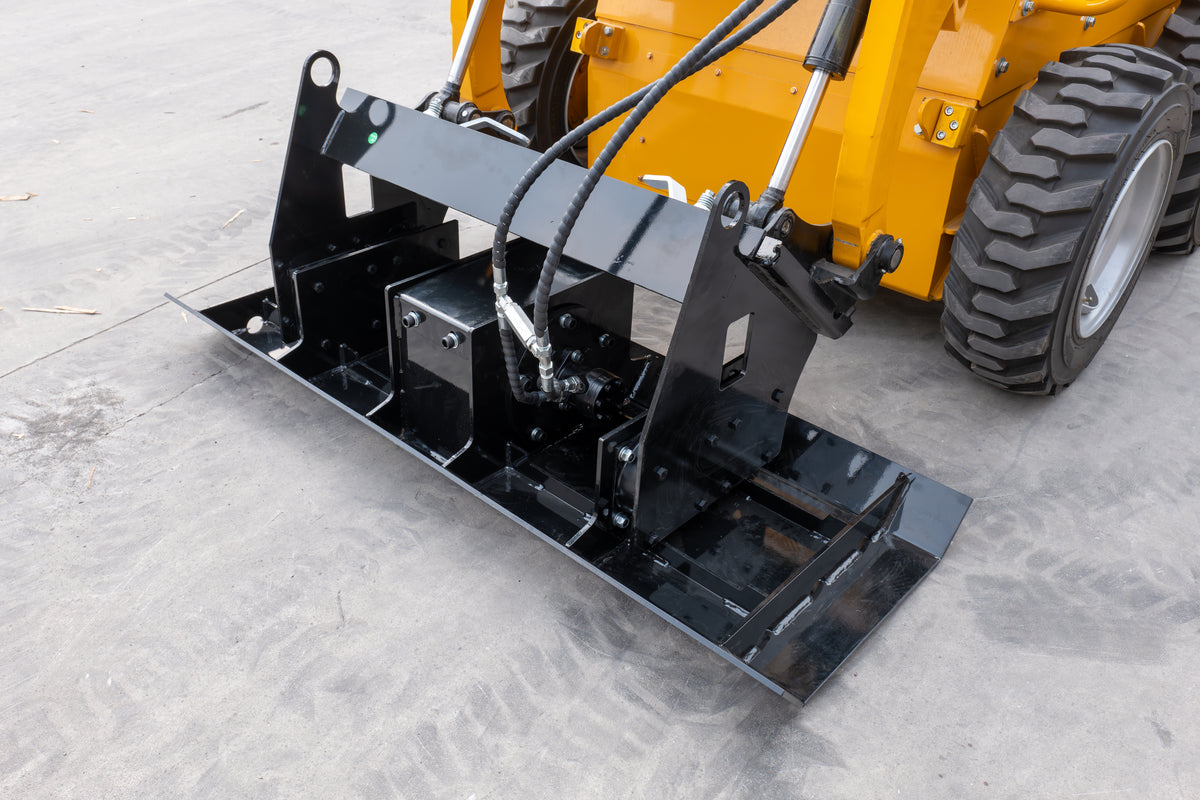
Yes, an inverted model designed for ground-level splitting can let the operator position the attachment over a round and split from the cab. Conventional table-loading models work differently. Confirm the exact model’s operating method, capacity, and required carrier protection.
Q2. Does a Four-Way Wedge Work Well With Every Log?
No. A four-way wedge can reduce passes on suitable straight-grained wood, while knotty or stringy pieces may call for an approved two-way knife. Check wedge-specific diameter limits, which can differ from the splitter’s overall capacity.
Q3. What Maintenance Does a Saw-and-Split Processor Add?
A skid steer firewood processor with a chainsaw adds chain sharpening, tension checks, bar and sprocket inspection, and chain-oil replenishment. Confirm the service intervals, access to these components, and availability of the correct replacement chain and wear parts.
Q4. Is Freshly Processed Firewood Ready to Burn?
Only if it is dry enough. Cutting and splitting establish piece size, while moisture determines readiness. Follow the wood moisture testing method on a newly split interior face; below 20% is the usual target, subject to your appliance’s fuel instructions.
Q5. Is a Face Cord the Same as a Full Cord?
No. A full cord measures 128 cubic feet of neatly stacked wood. “Face cord” has no fixed volume without additional dimensions. Ask for stack dimensions so you can compare equipment output and firewood quantities using the same unit.





